
Whitening that’s
actually supervised.
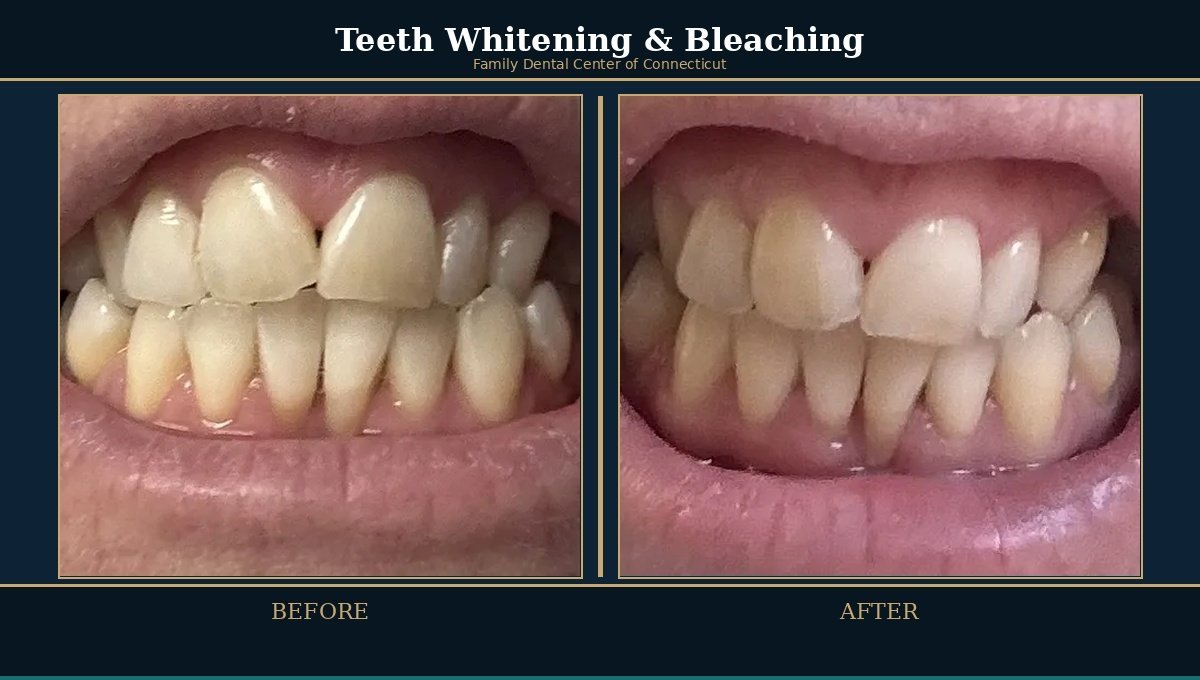
In-office whitening for a result the same day, or custom trays to use gradually at home. Both use professional concentrations dispensed for your teeth — not a one-size strip from a shelf.
Fast, or gradual.
Dr. Kasabji and Dr. Engelhardt offer both. Which suits you depends on your timeline and how sensitive your teeth are.
Single-visit whitening
Carried out here in one appointment, at a higher concentration than anything you can buy, with your gums protected throughout. You leave with the change already made.
Best when there is a date in the diary — a wedding, a photograph, an interview.
Custom take-home trays
Trays moulded to your own teeth, with gel dispensed in the concentration prescribed for your sensitivity level and how far you want to go.
Slower, gentler, and easier to control if your teeth react. A maintenance kit can also extend an in-office result.
Crowns and veneers don’t whiten.
This is the single most useful thing to understand before you start. Whitening gel works on natural enamel. It does nothing to porcelain or composite — so existing crowns, veneers, bonding and tooth-coloured fillings stay exactly the shade they are.
If you have a crown on a front tooth and whiten everything around it, that crown will suddenly look darker than its neighbours. It was matched to the old shade.
Which is why sequence matters. If you are planning new restorations as well, whitening is done first, so the new work can be shade-matched to your whitened enamel rather than to the colour you are about to leave behind.
We will look at what restorations you already have and tell you what will and won’t change.
We don’t whiten over a problem.
Applying whitening gel to a tooth with an open cavity causes significant sensitivity and is clinically inappropriate. So every whitening case starts with a look, not a shade guide.
Decay is treated first
Any open cavity is dealt with before whitening. This is not an upsell — it is the difference between a bright smile and a painful week.
Gums are checked
Inflamed or receding gums make whitening uncomfortable and can make the result uneven at the gum line.
Cause of staining assessed
Surface staining from coffee, tea and wine lifts well. Staining from within the tooth behaves differently, and we will say so honestly.
More on the mechanism: how whitening at the dentist actually works ›
Sensitivity is normal. It passes.
Temporary sensitivity is the most common side effect of whitening and typically settles within twenty-four to forty-eight hours of each session. It is not a sign something has gone wrong.
If your teeth are already sensitive, say so. The concentration can be adjusted, and the take-home route spreads the effect out rather than concentrating it into one appointment.
- Examination before any whitening begins
- Gel concentration prescribed for your sensitivity
- Gums protected during in-office treatment
- Take-home maintenance kit available afterwards
- Clear cost estimate at the consultation
- Available at both the Wethersfield and Enfield offices
Answered honestly.
Does insurance cover teeth whitening?
Why not just use strips from the pharmacy?
How long will the result last?
Will it damage my enamel?
How white will my teeth actually get?
Can I whiten if I am pregnant?
Start with the examination.
We’ll check what you have, tell you what will actually change, and give you a clear cost before anything begins.