
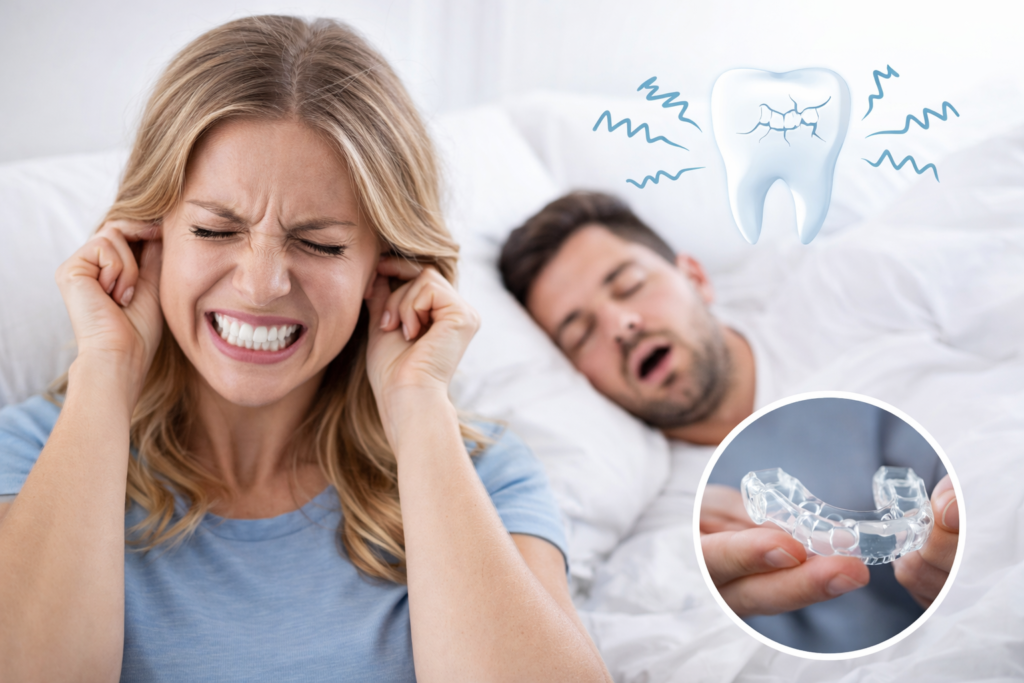
Do you ever wake up in the morning with a sore jaw, dull headache, or teeth that feel strangely sensitive — even though nothing happened the night before? You might be grinding your teeth in your sleep without even knowing it.
This condition is called bruxism, and it’s far more common than most people realize. In fact, studies suggest that up to 30% of adults experience bruxism at some point in their lives. The tricky part? Most of them have no idea it’s happening.
In this article, we’ll explain exactly what bruxism is, why it happens, how to recognize the warning signs, and — most importantly — what you and your dentist can do to protect your teeth before serious damage occurs.
What Is Bruxism?
Bruxism is the medical term for teeth grinding or jaw clenching — either during sleep (sleep bruxism) or while awake (awake bruxism). While an occasional clench when you’re stressed is normal, chronic bruxism places enormous pressure on your teeth, jaw muscles, and joints.
To put it in perspective: the average bite force during normal chewing is around 70 pounds per square inch. During grinding episodes, that force can surge to 250 pounds or more. Over time, this repeated stress wears down enamel, cracks teeth, strains jaw muscles, and can lead to a cascade of oral health problems.
There are two main types:
- Sleep bruxism — happens during sleep, often without any awareness. This is considered a sleep-related movement disorder.
- Awake bruxism — happens during the day, usually when a person is concentrating, stressed, or anxious. People may clench without full awareness.
What Causes Bruxism?
Bruxism doesn’t have a single cause. It’s usually the result of a combination of physical, psychological, and lifestyle factors. Here’s a closer look at the most common contributors:
1. Stress and Anxiety
This is the number one trigger. When you’re under pressure — at work, at home, or going through major life changes — your body holds tension. The jaw and facial muscles are a common storage spot for that tension, often releasing it during sleep as grinding or clenching.
2. Sleep Disorders
People who suffer from sleep apnea, snoring, or other sleep-related conditions are significantly more likely to grind their teeth. Bruxism and sleep apnea are often linked, which is why treating one sometimes improves the other.
3. Certain Medications and Substances
Some antidepressants — particularly SSRIs (selective serotonin reuptake inhibitors) — are associated with bruxism as a side effect. Caffeine, alcohol, and recreational drugs such as nicotine have also been shown to increase the likelihood of grinding.
4. Bite Misalignment (Malocclusion)
When your upper and lower teeth don’t fit together properly, your jaw may unconsciously try to “find” a comfortable resting position, leading to grinding and clenching.
5. Genetics
If a parent grinds their teeth, there’s a higher chance their children will too. Research suggests a genetic component to bruxism, particularly the sleep variety.
6. Personality Traits
People who are naturally more aggressive, competitive, hyperactive, or highly driven tend to be more prone to bruxism. The mind-body connection plays a significant role.
7. Age
Bruxism is common in young children (especially as new teeth emerge), but it often resolves on its own. In adults, it can develop or worsen at any stage of life, particularly during periods of high stress.
How Do You Know If You’re Grinding Your Teeth?
This is where it gets tricky. Most people who grind their teeth at night are completely unaware of it — until a partner tells them, or their dentist spots the signs at a routine checkup.
Here are the most common symptoms to watch out for:
Oral and Dental Symptoms
- Flattened, chipped, fractured, or worn-down teeth — especially on the biting surfaces
- Increased tooth sensitivity — particularly to hot, cold, or sweet foods and drinks
- Loose teeth — due to the repeated stress on tooth roots
- Cracked or broken dental restorations — fillings, crowns, or veneers that keep failing
- Damage to the inside of your cheeks — from biting during sleep
- Tooth pain that has no obvious cause
Jaw and Facial Symptoms
- Jaw soreness or stiffness, especially in the morning
- Difficulty opening or closing your mouth fully
- A clicking, popping, or locking sensation in the jaw joint (TMJ)
- Tired jaw muscles, even after a full night’s rest
- Facial pain or tightness, particularly around the temples and cheeks
Head and Neck Symptoms
- Morning headaches — often starting at the temples
- Earaches — even when there’s no infection
- Neck and shoulder tension that doesn’t respond to stretching or massage
- Disrupted sleep — either for you or your sleeping partner, who may hear the grinding
If you recognize three or more of these symptoms, it’s worth bringing up with your dentist at your next visit. Even if you’re not sure, a dentist can often detect signs of grinding simply by examining your teeth.
What Happens If Bruxism Is Left Untreated?
Ignoring bruxism isn’t a safe option. Without treatment, the long-term consequences can be serious — and expensive to fix.
Enamel loss is permanent. Once your tooth enamel is worn away by grinding, it cannot grow back. This leaves your teeth vulnerable to decay, sensitivity, and structural damage.
Over time, untreated bruxism can lead to:
- Severe tooth wear requiring crowns, veneers, or full smile reconstruction
- Cracked or fractured teeth that may need extraction
- Temporomandibular joint (TMJ) disorder — chronic jaw pain and dysfunction
- Gum recession accelerated by bite pressure
- Bone loss around the teeth in severe cases
- Chronic headaches that significantly impact quality of life
The good news is that with the right treatment, all of this is preventable.
How Is Bruxism Diagnosed?
Diagnosis typically happens during a routine dental checkup. Your dentist will:
- Examine your teeth for signs of unusual wear, cracks, or flattening
- Check your jaw muscles for tenderness or tightness
- Look for damage to the inside of your cheeks
- Ask about your symptoms, sleep habits, stress levels, and medications
In some cases — particularly when sleep apnea is suspected — your dentist may refer you to a sleep specialist for a more in-depth evaluation.
This is one of the many reasons why regular dental visits are so important. Many bruxism cases are caught early precisely because a dentist notices subtle warning signs before the patient experiences any pain.
How Is Bruxism Treated?
There is no single cure for bruxism, but there are highly effective ways to manage it, prevent further damage, and relieve symptoms. Treatment is usually tailored to the underlying cause.
1. Custom Night Guard (Occlusal Splint)
This is the most common and most effective dental treatment for sleep bruxism. A custom-fitted night guard is a thin, durable appliance made from hard or soft dental-grade material. It fits over your upper or lower teeth and creates a protective barrier between them.
A night guard doesn’t stop the grinding itself — but it absorbs and redistributes the force, preventing direct tooth-on-tooth damage. Over-the-counter night guards from a pharmacy exist, but they rarely fit well and can actually worsen jaw problems. A custom appliance made by your dentist is always the preferred option.
2. Stress Management
Since stress is the leading trigger, addressing it directly can significantly reduce grinding. Useful approaches include:
- Therapy or counseling (particularly cognitive behavioral therapy / CBT)
- Regular exercise and physical activity
- Yoga, meditation, and mindfulness practices
- Establishing a calm bedtime routine
Your dentist may work alongside your primary care physician or a therapist to address the full picture.
3. Bite Correction
If malocclusion (misaligned bite) is contributing to your bruxism, your dentist may recommend orthodontic treatment (such as braces or clear aligners) or equilibration — a procedure that smooths and reshapes specific tooth surfaces to improve how your bite fits together.
4. Muscle Relaxation Techniques
For daytime (awake) bruxism, becoming more conscious of your jaw position throughout the day is key. Your dentist or therapist may teach you to keep your lips together, teeth slightly apart, and tongue resting gently on the roof of your mouth — rather than clenching.
Applying a warm compress to your jaw muscles in the evening can also help reduce muscle tension.
5. Botox Injections
In more severe cases, Botox injections into the masseter muscles (the main chewing muscles) can significantly reduce the force of grinding. This approach is becoming increasingly popular and has shown strong results in patients who haven’t responded to other treatments. The effects typically last 3–6 months.
6. Treating Underlying Sleep Disorders
If your bruxism is linked to sleep apnea, treating the sleep disorder often leads to a significant reduction in grinding. Your dentist may refer you to a sleep specialist and, in some cases, a custom oral appliance may address both conditions simultaneously.
7. Medication Adjustments
If your grinding is a side effect of a medication (such as an SSRI), your doctor may be able to adjust the dose or switch to an alternative. Never stop or change medication without consulting your doctor first.
Can Children Have Bruxism?
Yes — bruxism is actually quite common in children, especially between the ages of 3 and 6 (when baby teeth are present) and again around ages 10 to 13. It often occurs in response to:
- Teething or changes in the bite as new teeth emerge
- Stress or anxiety at home or school
- Hyperactivity
- Certain medical conditions
The encouraging news is that most children outgrow bruxism on their own without needing treatment. However, if your child wakes up with jaw pain, complains of headaches, or if you hear grinding during the night, it’s worth mentioning to your dentist.
Tips to Reduce Bruxism at Home
While professional treatment is essential, there are things you can do every day to support your recovery and reduce grinding:
- Avoid caffeine and alcohol in the hours before bedtime — both can intensify grinding episodes
- Limit chewing gum — it trains your jaw muscles to clench
- Don’t chew on pens, pencils, or fingernails — it reinforces the clenching habit
- Apply a warm, damp cloth to your jaw before bed to relax the muscles
- Practice jaw stretches recommended by your dentist or physical therapist
- Establish a calming bedtime routine — avoid screens, heavy meals, and stressful conversations close to sleep
- Stay hydrated — dehydration can worsen muscle tension
- Sleep on your back or side, avoiding positions that put pressure on your jaw
When Should You See a Dentist About Bruxism?
You should schedule a dental visit if you:
- Wake up regularly with jaw pain, headaches, or tooth sensitivity
- Have noticed your teeth looking shorter, flatter, or more transparent at the edges
- Have had multiple fillings, crowns, or veneers crack or fail
- Have a partner who tells you they hear grinding during the night
- Experience clicking or pain in your jaw joint
- Suspect your child may be grinding their teeth
The earlier bruxism is caught, the easier — and less costly — it is to manage. A dentist can assess the extent of any damage, identify the likely cause, and create a personalized treatment plan to protect your smile going forward.
How Family Dental Center of Connecticut Can Help
At Family Dental Center of Connecticut in Wethersfield, CT, we understand that bruxism is about more than just your teeth — it affects your sleep, your comfort, and your daily quality of life.
Our team is experienced in identifying the early signs of teeth grinding and providing tailored solutions, including:
- Custom-fitted night guards designed for maximum comfort and protection
- Comprehensive bite analysis to detect underlying misalignment
- Restorative treatments to repair any damage already caused by grinding
- Friendly, judgment-free guidance on stress management and lifestyle adjustments
Whether you’re dealing with a mild case or years of unaddressed grinding, we’re here to help — one step at a time.
📞 Call us at 860-430-4388 or stop by our office at 365 Maple St, Wethersfield, CT 06109 to schedule your appointment today.
Final Thoughts
Bruxism is one of those conditions that hides in plain sight. It happens mostly while you sleep, it builds up gradually, and by the time most people notice something is wrong, their teeth have already taken a significant hit.
The key takeaway is this: you don’t have to wait for pain to seek help. Regular dental checkups are your best defense. When your dentist can catch the early signs of grinding — worn enamel, micro-cracks, tender jaw muscles — they can intervene before things escalate into costly damage.
If any of the symptoms in this article sound familiar, don’t ignore them. A simple conversation with your dentist could save your smile.
Have questions about bruxism or teeth grinding? Contact Family Dental Center of Connecticut — we’re always happy to help.