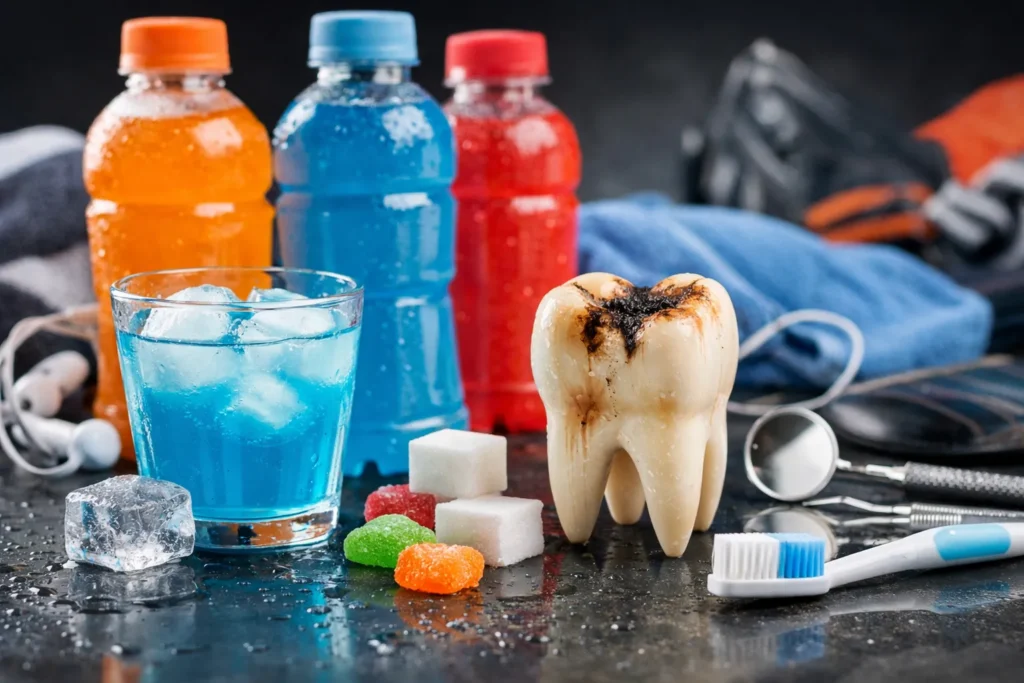
Sports drinks are often marketed as the go-to choice for hydration and performance. They promise electrolytes, energy, and improved recovery, which makes them especially popular among athletes, teens, gym-goers, and busy adults. But while these drinks may support physical activity in certain situations, they can be much less friendly to your teeth.
So, are sports drinks bad for your teeth? In many cases, yes. Frequent consumption of sports drinks can increase the risk of enamel erosion, cavities, and tooth sensitivity. The reason comes down to two major factors: sugar and acid.
Why sports drinks can harm your teeth

Most sports drinks contain high levels of sugar. Sugar feeds the bacteria in your mouth, and those bacteria produce acids that attack your tooth enamel. Over time, this can lead to tooth decay.
On top of that, sports drinks are usually acidic on their own. That means even sugar-free versions may still weaken enamel. When enamel becomes softer and thinner, your teeth are more vulnerable to staining, sensitivity, and cavities.
In simple terms, sports drinks can create a double problem for your teeth:
- sugar that promotes decay
- acid that wears down enamel
What makes sports drinks different from water?
Water hydrates your body without damaging your teeth. It helps rinse away food particles, supports saliva production, and contains no sugar or harmful acids.
Sports drinks, on the other hand, are designed for intense exercise or prolonged physical activity. For the average person, especially someone doing light workouts or daily activities, they are often unnecessary. If you are reaching for a sports drink after every gym session, walk, or errand, your teeth may be paying the price.
Common dental problems linked to sports drinks
1. Enamel erosion
The acids in sports drinks can slowly wear away the enamel, which is the protective outer layer of your teeth. Once enamel is lost, it does not grow back.
2. Tooth sensitivity
As enamel thins, teeth may become more sensitive to hot, cold, or sweet foods and drinks.
3. Cavities
Sugar combined with acid creates an ideal environment for cavity-causing bacteria.
4. Dry mouth during exercise
Many people sip sports drinks during workouts when their mouths are already dry. Since saliva helps protect teeth, a dry mouth can make acid damage worse.
Are sports drinks worse than soda?
In some cases, they can be just as harmful. Many people assume sports drinks are healthier than soda because they are associated with fitness and wellness. But from a dental perspective, the combination of acid and sugar can make sports drinks surprisingly damaging, especially when consumed slowly over time.
Sipping a sports drink for an hour at the gym may expose your teeth to repeated acid attacks. That kind of frequent exposure can be harder on enamel than drinking something quickly with a meal.
Who is most at risk?
Certain people may be more likely to experience dental damage from sports drinks, including:
- teenagers and young athletes
- people who sip sports drinks daily
- adults with dry mouth
- patients who already have enamel wear or sensitivity
- anyone who drinks acidic beverages frequently throughout the day
Parents are often surprised to learn that regular sports drink use in children and teens can contribute to early enamel damage. Even healthy, active habits can have hidden side effects when it comes to oral health.
How to protect your teeth if you drink sports drinks

You do not always have to avoid sports drinks completely, but it is smart to reduce their impact on your teeth.
Here are a few dentist-approved tips:
Drink them only when truly necessary
Sports drinks may be useful during prolonged, intense exercise, but they are usually not needed for casual activity. Water is the better everyday choice.
Avoid sipping for long periods
The longer your teeth are exposed to sugar and acid, the greater the risk. Try to finish the drink in one sitting rather than sipping it slowly.
Use a straw when possible
A straw can help reduce contact between the drink and your teeth.
Rinse with water afterward
After drinking a sports drink, rinse your mouth with plain water to help wash away acids and sugar.
Do not brush immediately
It may seem like a good idea, but brushing right after an acidic drink can actually spread the acid around softened enamel. Wait about 30 minutes before brushing.
Keep up with regular dental cleanings
Routine dental exams can help catch early signs of enamel erosion, cavities, and other problems before they get worse. Schedule your dental cleaning and examination in Wethersfield, CT to keep your enamel monitored.
What should you drink instead?
For most people, water is the best option for hydration. If you want variety, you can also consider:
- plain water with fruit infusion
- milk with meals
- low-sugar hydration options recommended by your doctor or dentist
The best choice depends on your activity level and overall health, but when it comes to protecting your smile, water wins almost every time.
When should you talk to a dentist?
If you regularly drink sports drinks and notice any of the following, it may be time to schedule a dental visit:
- tooth sensitivity
- yellowing teeth
- frequent cavities
- rough or worn edges on teeth
- pain when eating cold or sweet foods
A dentist can evaluate whether enamel erosion or decay may be developing and recommend the best next steps.
Sports drinks may help with hydration during intense exercise, but they can be tough on your teeth. Their sugar and acid content can increase your risk of enamel erosion, sensitivity, and cavities, especially when consumed often.
If you enjoy sports drinks, moderation matters. Choosing water more often, limiting how long you sip, and staying consistent with dental checkups can go a long way in protecting your oral health.
If you have questions about tooth sensitivity, enamel wear, or cavity prevention, our team in Wethersfield, CT is here to help. A healthy smile should support your active lifestyle, not suffer because of it.
Related Articles
- How Mouth Bacteria Affect Cavity Risk
- Sugar and Teeth: What Your Dentist Wants You to Know
- 4 Most Common Signs of Tooth Decay
Ready to schedule your visit? Call (860) 430-4388 or visit our Contact Us page. Family Dental Center of Connecticut serves patients throughout Wethersfield, CT and Hartford County.