
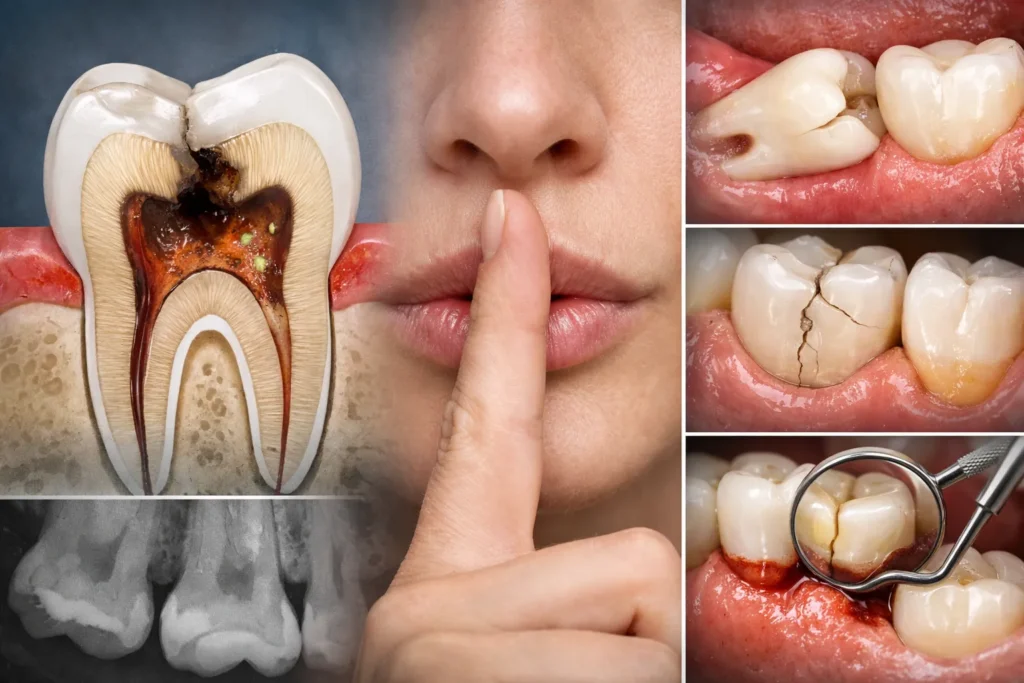
Many people believe that dental problems always come with pain. In reality, some of the most serious oral health issues develop silently, without discomfort or obvious symptoms. By the time pain appears, the damage is often advanced and requires more complex treatment.
Understanding these hidden dental problems is essential for prevention, early intervention, and long-term oral health.
Why Dental Problems Can Be Painless
Teeth and gums don’t always signal trouble right away. Certain areas of the mouth have limited nerve sensitivity, and some conditions progress slowly. As a result, damage can occur beneath the surface while everything feels “normal.”
This is why regular dental checkups are critical — they help detect issues before symptoms appear.
Common Hidden Dental Problems You Shouldn’t Ignore
1. Early Tooth Decay
Cavities don’t always hurt at first. Early decay begins by weakening enamel, which has no nerve endings. Pain usually starts only after the decay reaches deeper layers of the tooth, where nerves are present.
Why it matters:
When caught early, cavities can often be treated conservatively. Left untreated, they may lead to infection, root canal treatment, or tooth loss.
2. Gum Disease in Its Early Stages
Gum disease often starts silently. Mild inflammation, slight redness, or minimal bleeding can be easy to overlook or dismiss.
Why it matters:
Without treatment, gum disease can progress to bone loss, gum recession, and eventually tooth loss — often with little pain until advanced stages.
3. Cracks and Microfractures in Teeth
Small cracks may not cause pain right away, especially if they don’t reach the nerve. Many patients are unaware of these fractures until the tooth weakens further.
Why it matters:
Cracks can worsen over time, leading to infection or sudden tooth fracture that may require extraction.
4. Impacted or Improperly Positioned Teeth
Wisdom teeth or crowded teeth can remain painless for years while causing pressure, inflammation, or damage to neighboring teeth.
Why it matters:
These issues can increase the risk of decay, gum disease, and misalignment — often without immediate discomfort.
5. Bone Loss Around Teeth
Bone loss is completely painless in its early and even moderate stages. Patients often discover it only through dental X-rays.
Why it matters:
Bone loss compromises tooth stability and can limit future treatment options, including dental implants.
6. Oral Infections Beneath Existing Dental Work
Infections can develop under crowns, fillings, or bridges without noticeable symptoms.
Why it matters:
By the time pain or swelling appears, the infection may be extensive, requiring more invasive treatment.
Warning Signs That Are Easy to Miss
Even without pain, these subtle signs may indicate a problem:
- Bleeding gums when brushing or flossing
- Persistent bad breath
- Slight tooth sensitivity
- Gum recession
- Changes in bite or chewing comfort
If you notice any of these, it’s best not to wait.
How Regular Dental Visits Protect You
Routine dental exams and professional cleanings allow dentists to:
- Detect decay before it causes pain
- Identify early gum disease
- Monitor changes in bone and tooth structure
- Catch hidden infections through imaging
Preventive care is almost always simpler, more affordable, and less invasive than treating advanced problems.
Don’t Wait for Pain to Take Action
Pain is not the first sign of dental trouble — it’s often the last warning. Many serious dental conditions can be managed or even prevented entirely when detected early.
Scheduling regular dental checkups is one of the most effective ways to protect your smile, your comfort, and your overall health.
If it’s been a while since your last visit, now is the perfect time to take a proactive step.