
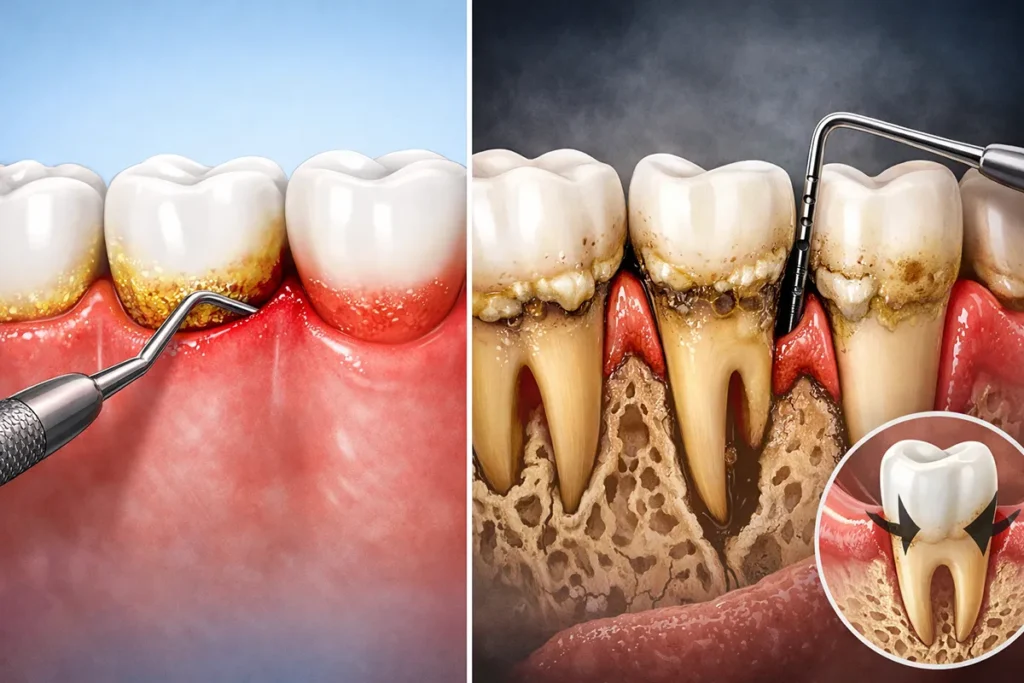
Gum disease is one of the most common oral health conditions—and one of the most misunderstood. Many people assume that if their teeth don’t hurt, everything is fine. In reality, gum disease often progresses silently, especially in its early stages.
Understanding the difference between gingivitis and periodontitis can help you recognize warning signs early and protect your teeth, gums, and overall health.
What Is Gum Disease?
Gum disease, also known as periodontal disease, is an infection of the tissues that support your teeth. It begins when plaque (a sticky film of bacteria) builds up along the gumline and isn’t removed through proper brushing, flossing, and professional cleanings.
If left untreated, gum disease can lead to:
- Gum recession
- Bone loss
- Loose teeth
- Tooth loss
- Increased risk of systemic health issues
Stage 1: Gingivitis (Early & Reversible)
Gingivitis is the earliest and mildest form of gum disease—and the good news is that it’s reversible with prompt care.
Common Signs of Gingivitis
- Red or swollen gums
- Bleeding when brushing or flossing
- Tender gums
- Bad breath that doesn’t go away
At this stage, the infection is limited to the gums and has not yet damaged the bone that supports the teeth.
Treatment for Gingivitis
- Professional dental cleaning
- Improved brushing and flossing habits
- Antibacterial mouth rinses (if recommended)
- Regular dental checkups
With proper care, gums can return to a healthy state within weeks.
Stage 2–4: Periodontitis (Advanced & Progressive)
When gingivitis is left untreated, it can progress into periodontitis, a more serious condition that causes permanent damage.
What Happens in Periodontitis?
- Gums pull away from the teeth, forming deep pockets
- Bacteria spread below the gumline
- Bone and connective tissue begin to break down
- Teeth may loosen or shift
Symptoms of Periodontitis
- Persistent bad breath
- Gum recession (teeth look longer)
- Pus between teeth and gums
- Pain when chewing
- Loose or shifting teeth
- Changes in your bite
Unlike gingivitis, periodontitis cannot be reversed, but it can be managed with proper treatment.
Treatment Options for Periodontitis
Treatment depends on how advanced the disease is:
1. Deep Cleaning (Scaling & Root Planing)
- Removes plaque and tartar below the gumline
- Smooths tooth roots to help gums reattach
2. Periodontal Maintenance
- More frequent cleanings (every 3–4 months)
- Ongoing monitoring of gum pockets
3. Advanced Treatments (if needed)
- Antibiotic therapy
- Laser periodontal treatment
- Surgical procedures to reduce pocket depth or regenerate bone
Early intervention can significantly slow disease progression and help preserve your natural teeth.
Why Gum Disease Affects More Than Your Mouth
Research shows a strong connection between gum disease and overall health. Untreated periodontal disease has been linked to:
- Heart disease
- Diabetes complications
- Respiratory infections
- Pregnancy complications
Healthy gums play an important role in maintaining whole-body wellness.
How to Prevent Gum Disease
Prevention is always easier—and more affordable—than treatment.
Daily Habits That Protect Your Gums
- Brush twice a day with fluoride toothpaste
- Floss daily
- Use a dentist-recommended mouthwash
- Avoid tobacco products
Professional Care Matters
- Schedule regular dental cleanings and exams
- Don’t ignore bleeding gums
- Address sensitivity, swelling, or bad breath early
When Should You See a Dentist?
If you notice bleeding gums, gum recession, or persistent bad breath, don’t wait. Gum disease often progresses without pain, and early treatment can make all the difference.
Concerned about your gum health? A professional dental exam can detect gum disease early and help you protect your smile for years to come.